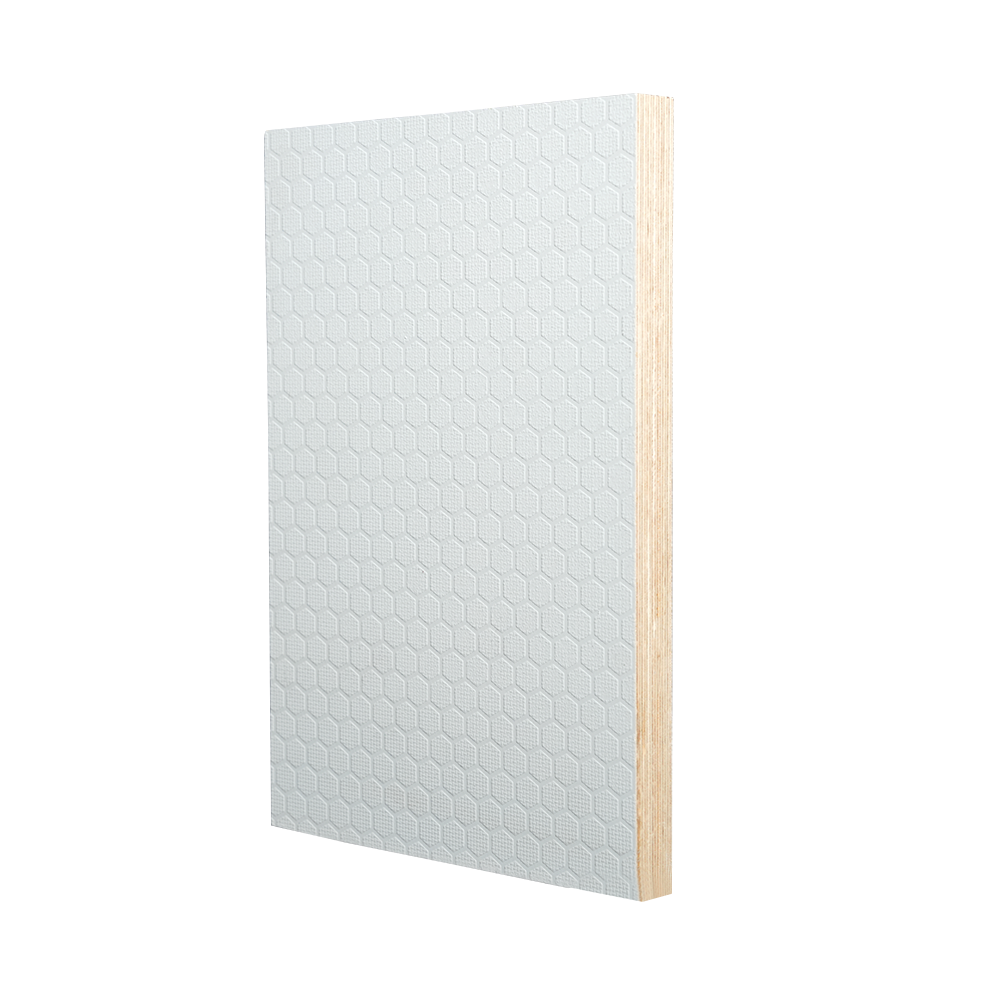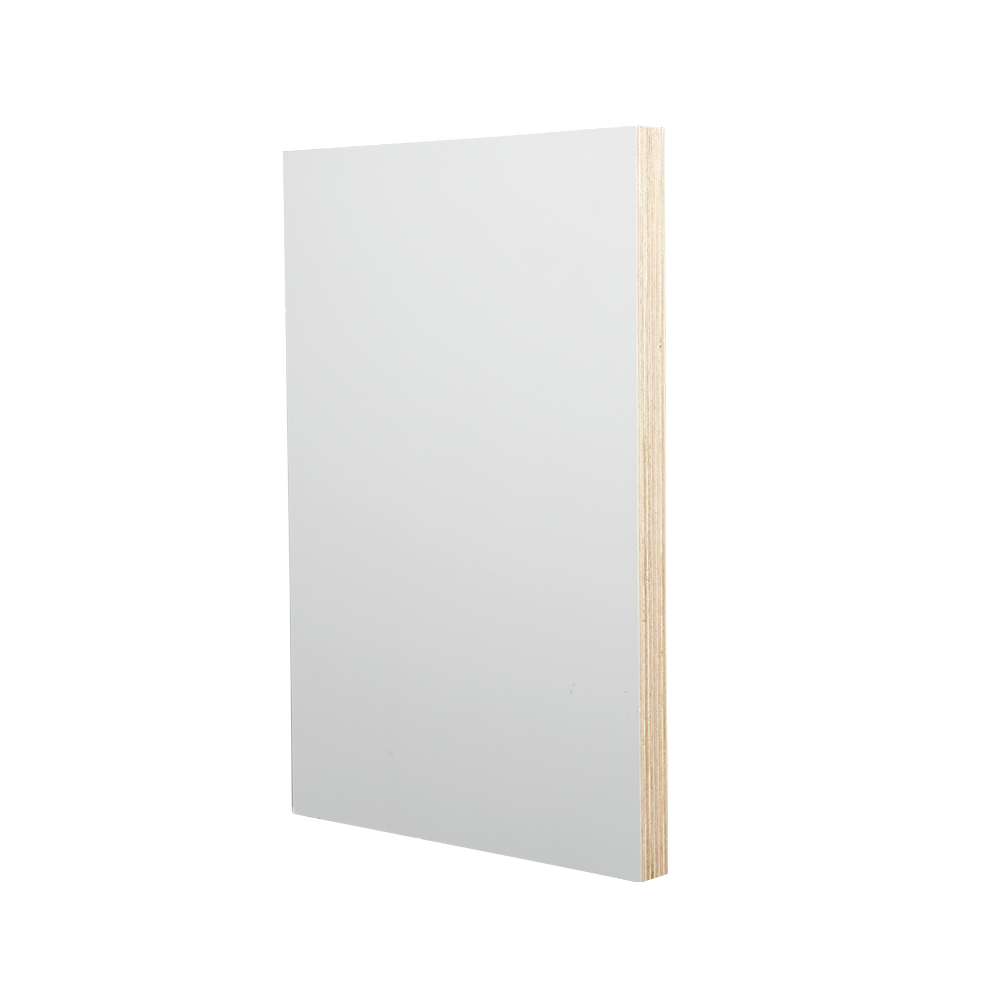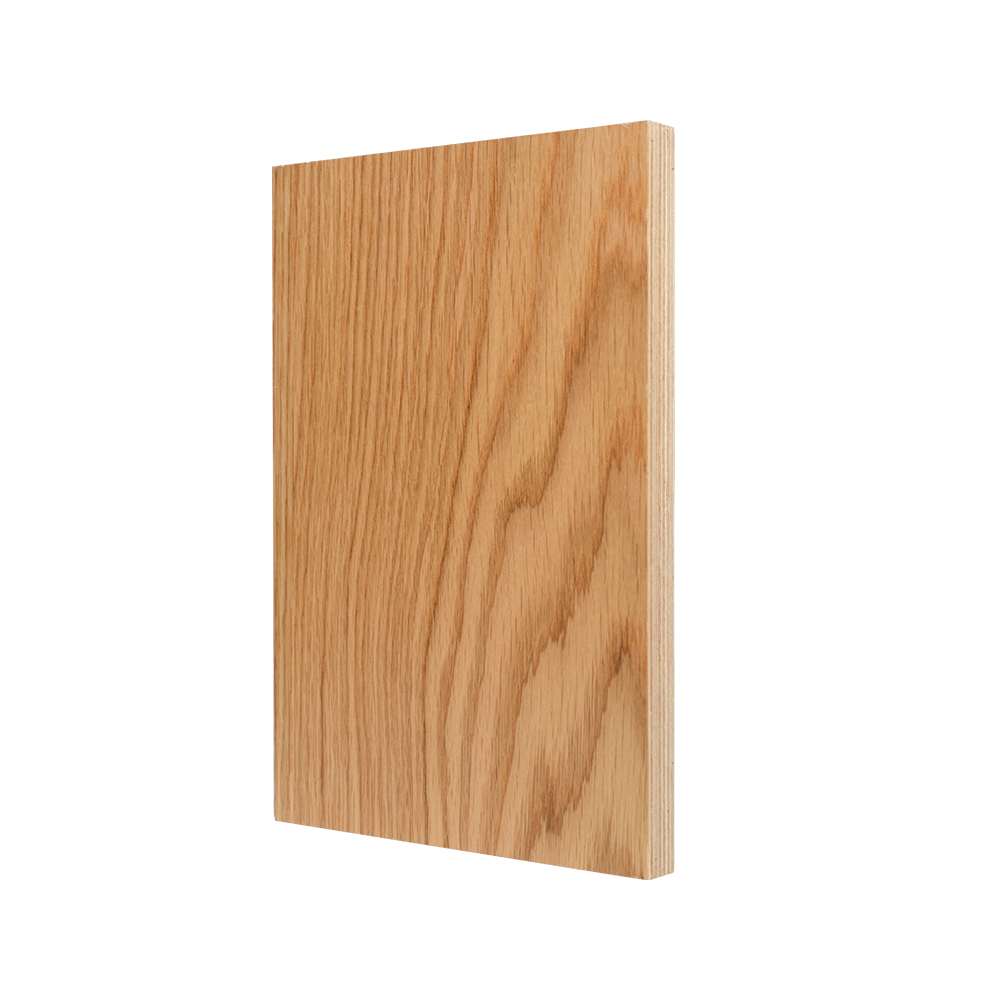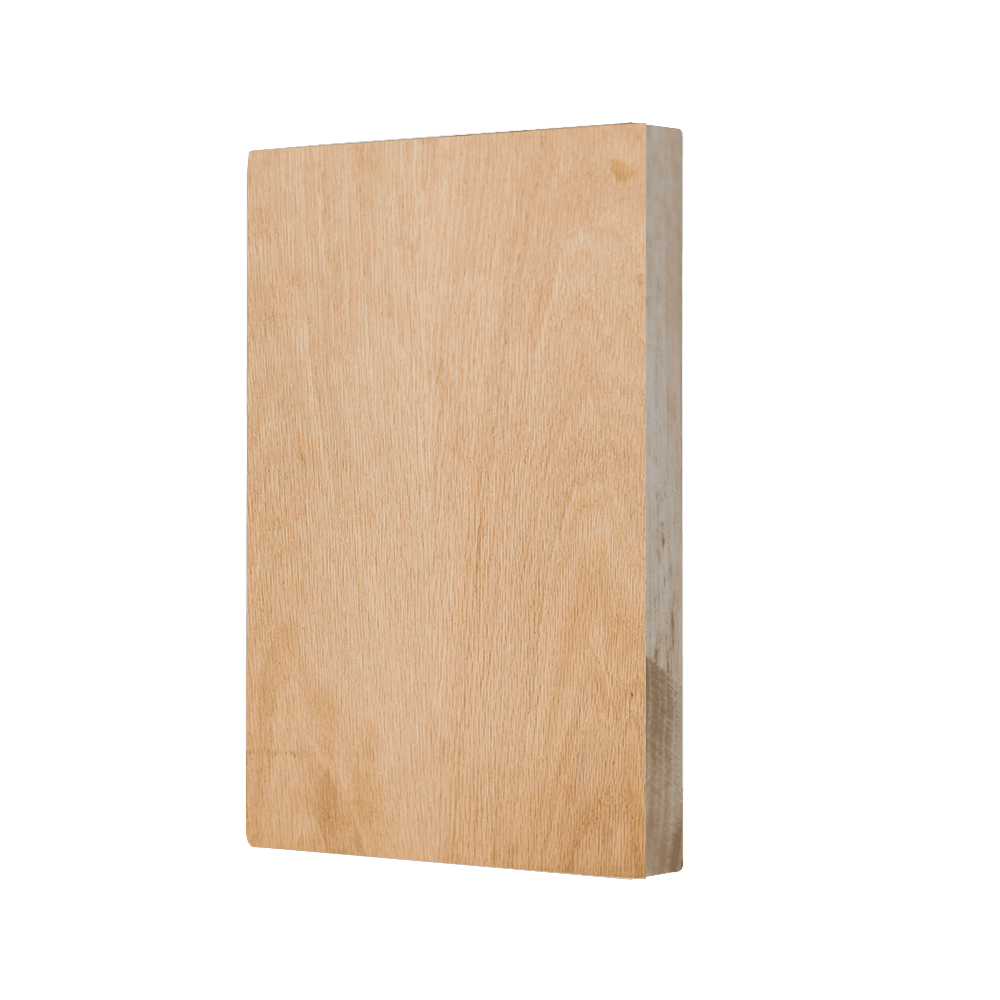

Birch plywood is the stronger panel, and the gap shows up at the spans people actually build. A full-birch sheet bonded with WBP glue typically reaches a bending strength of 60–90 MPa when the load runs parallel to the face grain, while a standard MDF board in the 730–780 kg/m³ density range lands between 30 and 45 MPa. Stiffness widens the difference further: 7,000–10,000 MPa for birch plywood along the grain against 2,800–4,000 MPa for MDF.
Two conditions come attached to those numbers. The plywood advantage is directional, so rotate the sheet and let the load run across the face grain, and the values fall back into MDF territory. MDF is also not a weak board in absolute terms. It is a weak board when used in thin sections that have to carry load. Add thickness, keep it dry, and it does a perfectly respectable job.
The practical trade-off is thickness. An 18 mm birch plywood panel and a 25 mm MDF panel end up roughly equal in stiffness, but they are not equal in weight, edge behaviour, or what happens after a pipe leaks above them. Most purchasing errors on this question begin with a buyer comparing two panels of the same thickness and assuming the comparison ends there.
"Stronger" is not one property, and a supplier who quotes a single figure usually quotes the one that flatters the board in front of them. In a panel specification, six measurable values decide the argument. Ask which one is being discussed before accepting a claim.
| Property | MDF (730–780 kg/m³) | Birch plywood (full birch, WBP) | Stronger panel |
|---|---|---|---|
| Density | 730–780 kg/m³ | 640–700 kg/m³ | MDF is denser |
| Bending strength, along face grain | 30–45 MPa | 60–90 MPa | Birch plywood |
| Bending strength, across face grain | 30–45 MPa | 30–45 MPa | Roughly equal |
| Modulus of elasticity, along face grain | 2,800–4,000 MPa | 7,000–10,000 MPa | Birch plywood |
| Modulus of elasticity, across face grain | 2,800–4,000 MPa | 3,000–5,000 MPa | Birch plywood, slightly |
| Internal bond | 0.6–0.9 MPa | 1.0–1.5 MPa | Birch plywood |
| Screw withdrawal, face | 1,000–1,400 N | 1,500–2,200 N | Birch plywood |
| Screw withdrawal, edge | 600–900 N | 900–1,400 N | Birch plywood |
| Thickness swelling after 24 h immersion | 12–25% | 2–6% | Birch plywood |
| Impact resistance | Low to moderate | High | Birch plywood |
| Surface hardness under point load | High | Moderate | MDF |
Read that table row by row rather than as a scorecard. MDF is the denser material and still the weaker one, which already tells you that density alone is not a strength claim. The only rows where the two materials genuinely meet are bending strength across the plywood face grain, and surface hardness under a point load.
Birch plywood is built from an odd number of veneers, usually 5, 7, 9 or 13 depending on thickness. Each veneer is peeled from a birch log, dried, coated with adhesive and stacked with the grain of every neighbouring sheet rotated 90 degrees. The assembly is pressed under heat and pressure until the glue lines cure. Continuous wood fibres run the full length of every ply, so breaking the panel means fracturing those fibres.
MDF takes the opposite route. Logs and residues are reduced to individual fibres, blended with resin, wax and moisture, formed into a mat and pressed into a board. No continuous fibre path exists in any direction. Strength comes from how tightly the mat is compacted and from the resin bridges between fibres. The surface layers are denser than the core because the press compacts them against the platens.
That structural difference explains the directional behaviour. A birch plywood panel loaded along the face grain is roughly two to two and a half times stiffer than the same panel loaded across it. An MDF panel behaves almost identically in both directions, because the fibre mat has no preferred orientation.
An 18 mm MDF board usually weighs more than an 18 mm birch plywood board, at roughly 13.5 kg/m² against 12.2 kg/m². Yet the plywood is stronger in bending by a wide margin. Mass in MDF reflects how tightly the fibre mat was compressed, not how efficiently the load path is organised. Two boards can weigh the same and carry completely different loads, which is why a weight figure is a poor proxy for a structural claim.
Most panel failures on site are not fractures. A shelf sags, a formwork panel bows, a countertop bounces under a hand. Deflection depends on stiffness multiplied by the second moment of area, and that second term grows with the cube of thickness. Moving from 18 mm to 25 mm multiplies resistance to bending by about 2.7, which is why adding millimetres is often cheaper than changing material.
Using typical values of 8,500 MPa for birch plywood along the grain and 3,200 MPa for MDF, an 18 mm plywood panel is roughly 2.7 times stiffer than an 18 mm MDF panel loaded the same way. To reach parity, the MDF needs to be around 25 mm thick. The chart below uses a relative index, with 18 mm birch plywood loaded along the face grain set at 100.
Matching stiffness is not the same as matching strength. The thicker MDF panel still fractures at a lower stress, still holds screws poorly at the edge, and still swells when it gets wet. It also carries half again as much weight, which matters on a wall-hung cabinet or an elevated deck.
| Panel and thickness | Relative stiffness | Relative bending strength | Weight per m² |
|---|---|---|---|
| 18 mm birch plywood, load along face grain | 100 | 100 | ~12.2 kg |
| 18 mm birch plywood, load across face grain | 38 | 48 | ~12.2 kg |
| 18 mm MDF | 38 | 50 | ~13.5 kg |
| 25 mm MDF, stiffness matched | 100 | 50 | ~18.8 kg |
| 25 mm birch plywood, load along face grain | 268 | 100 | ~17.0 kg |
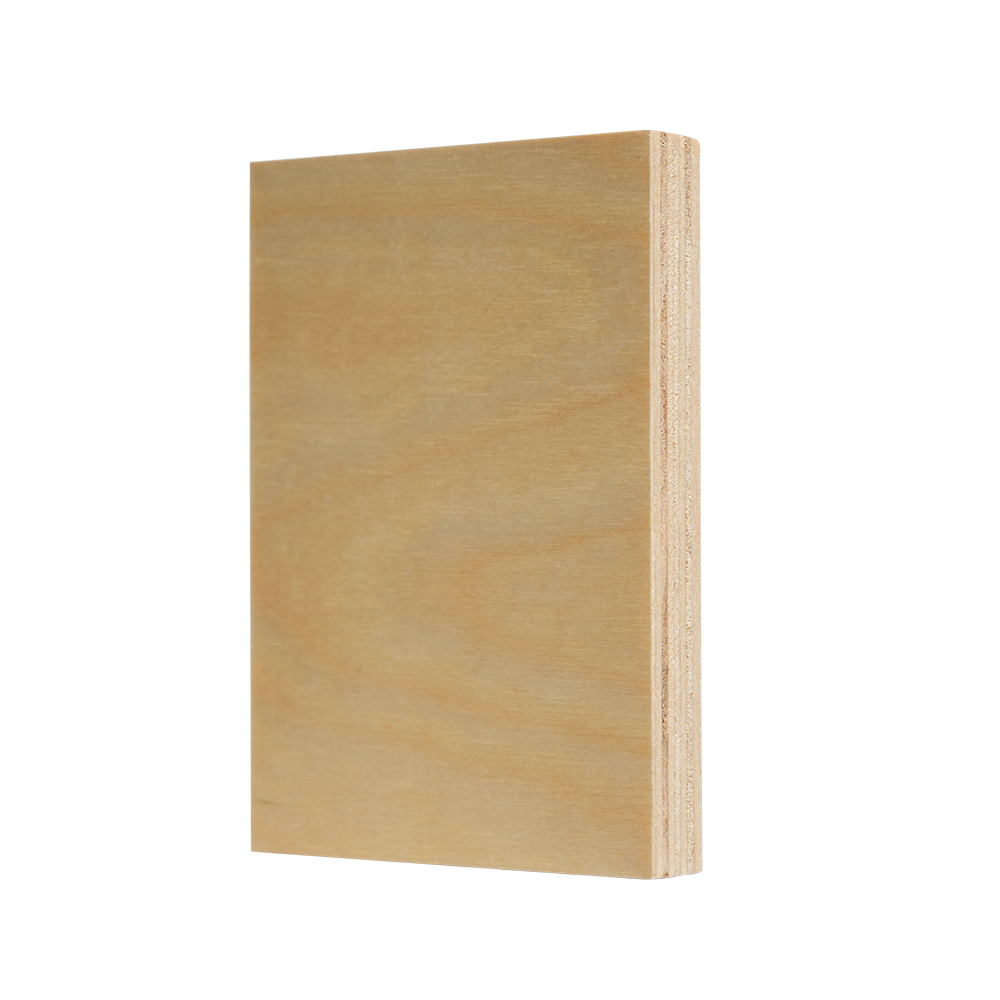
Where the highest bending values come from: full-birch construction rather than a mixed core, an odd ply count, and a face grade that has not been downgraded to fill an order. A B/BB or S/BB face panel with WBP glue and tight glue lines delivers the numbers at the top of the published range, while a low-grade panel with core gaps can sit 20% below them at the same nominal thickness.
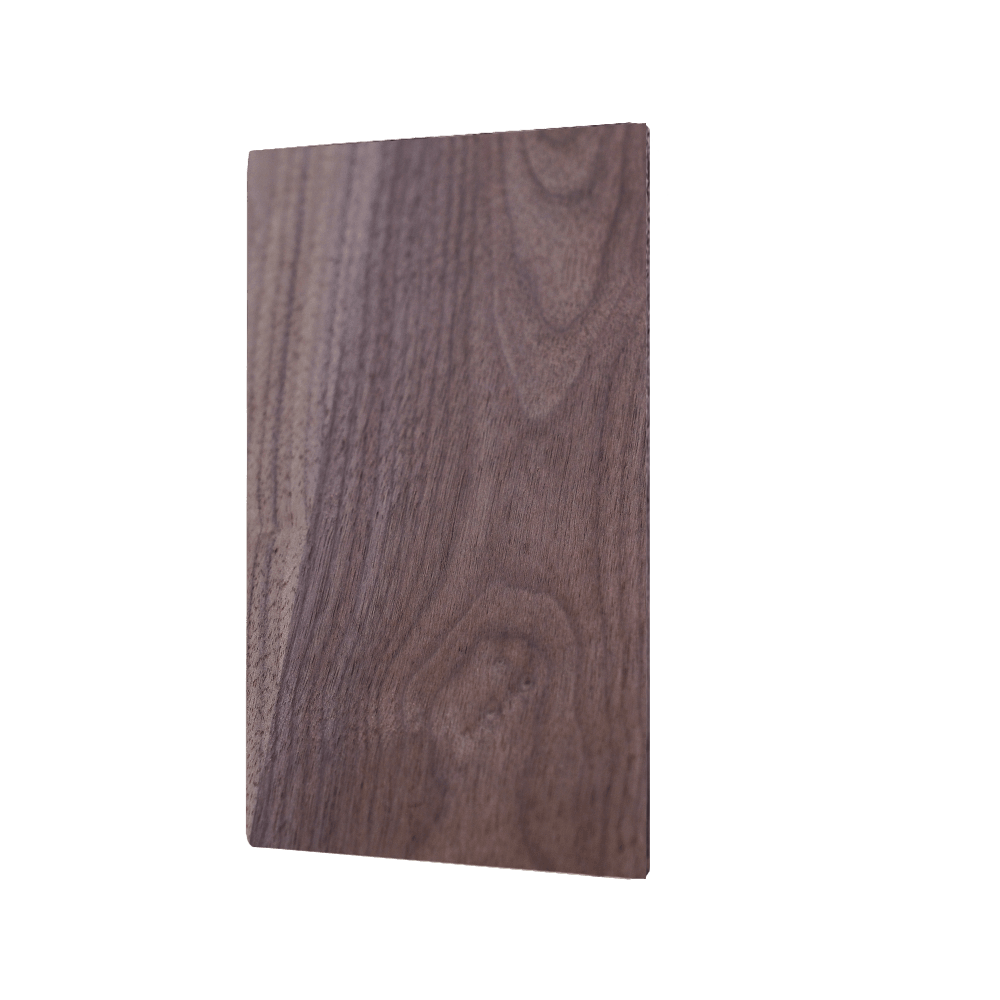
 Top Grades Birch Plywood B/BB and S/BBFull-birch multi-layer construction with WBP glue supports high bending values, edge-screw holding, and stable furniture or interior applications.View Product →
Edge screw holding is where the two materials separate most visibly in daily work. Birch plywood edge screws bite into alternating veneers, so the load spreads across several glue lines and fibre bands. Typical edge withdrawal values run 900–1,400 N for an 18 mm sheet, and a screw can often be removed and re-driven nearby without the joint collapsing.
MDF relies on the density of the fibre mat around a single screw thread. Face withdrawal is respectable at 1,000–1,400 N, but edge values drop to 600–900 N, and the material crumbles around an over-tightened screw. Shift a screw 10 mm and the original hole has already surrendered most of its grip. For drawer runners, hinges on exposed edges and knock-down fittings, that difference decides whether a piece survives a year of use or comes back through the service desk.
Practical consequences follow from the numbers. Drill pilot holes sized to the thread root in MDF, spread fittings across several screws, and never let one MDF edge screw carry a hanging load. In plywood, coarse-thread screws work well, and leaving at least 8 mm of material beyond the screw centre line keeps the veneer from splitting along the grain.
Strength figures measured in a laboratory at 12% moisture content do not survive contact with water. A standard MDF sample swells 12–25% in thickness after 24 hours of immersion and will not return to its original dimension once dried. It also sheds a large share of its bending stiffness while wet, and does not recover all of it. Moisture-resistant MDF reduces swelling to roughly 6–12%, but does not make the board waterproof.
Birch plywood bonded with WBP adhesive swells only 2–6% under the same test. The cross-laminated structure restrains movement in-plane, and the phenolic glue line resists water attack. Marine-bonded birch plywood sheets push this further by using void-free inner plies, so moisture has fewer paths to travel along inside the panel.
This is why wet-service decisions rarely hinge on bending strength. A panel that is 30% stronger in a dry room can be the weaker choice in a bathroom, a laundry or on a construction site where formwork is stripped and reused in the rain. Film-faced plywood used for concrete pouring is judged on how many times it can be reused, and that figure follows glue quality and edge sealing far more closely than it follows a formal strength rating.
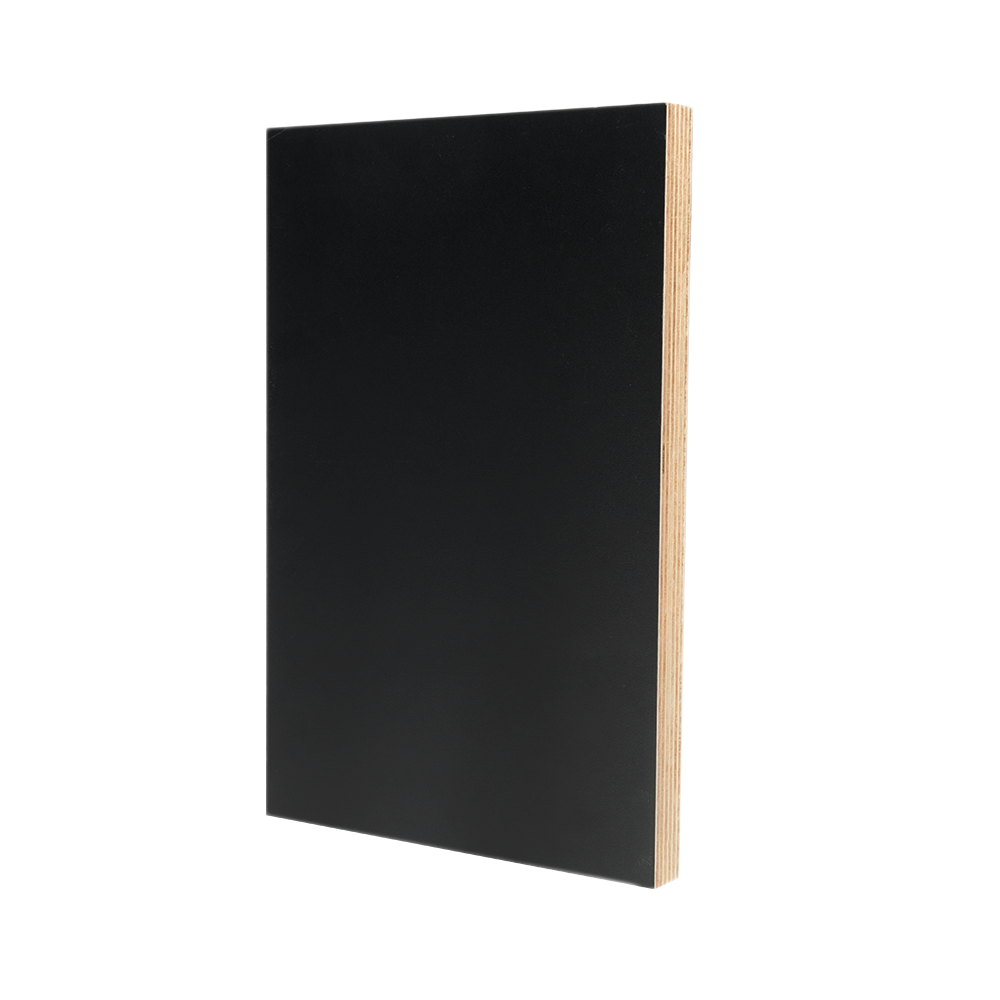
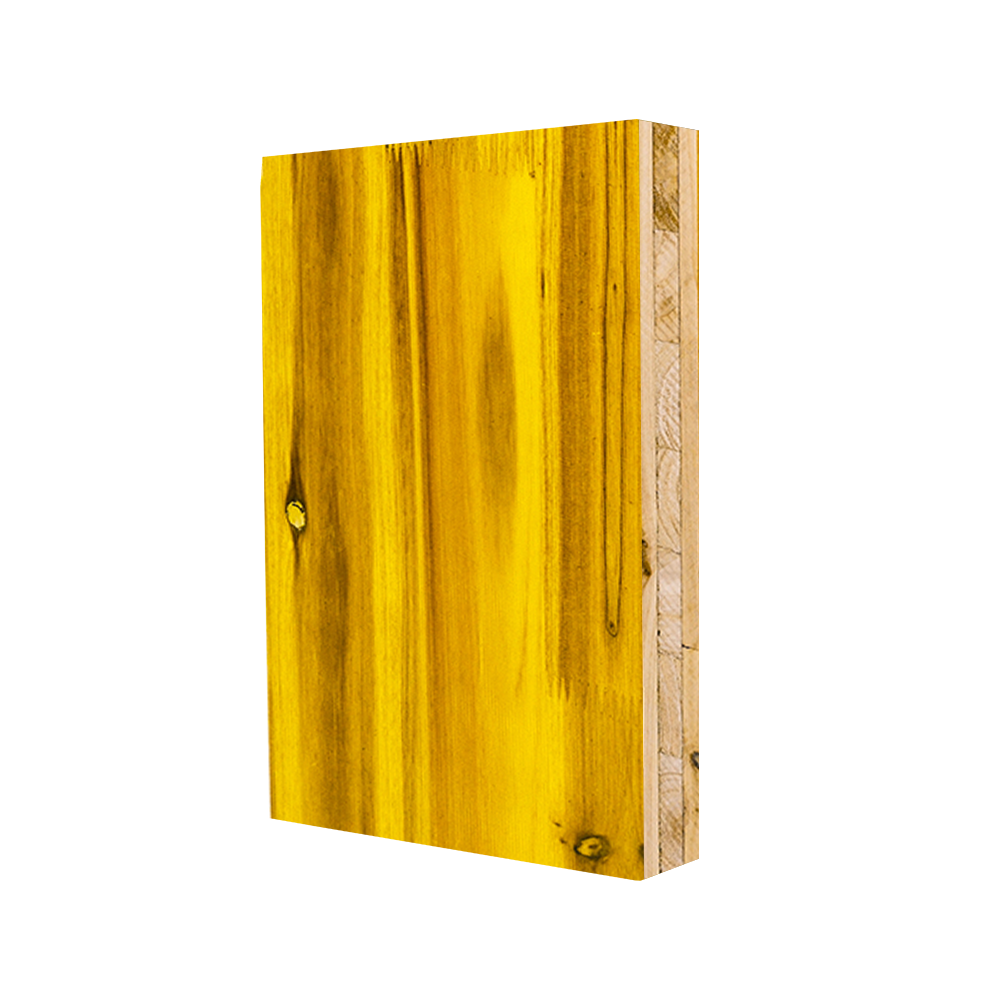
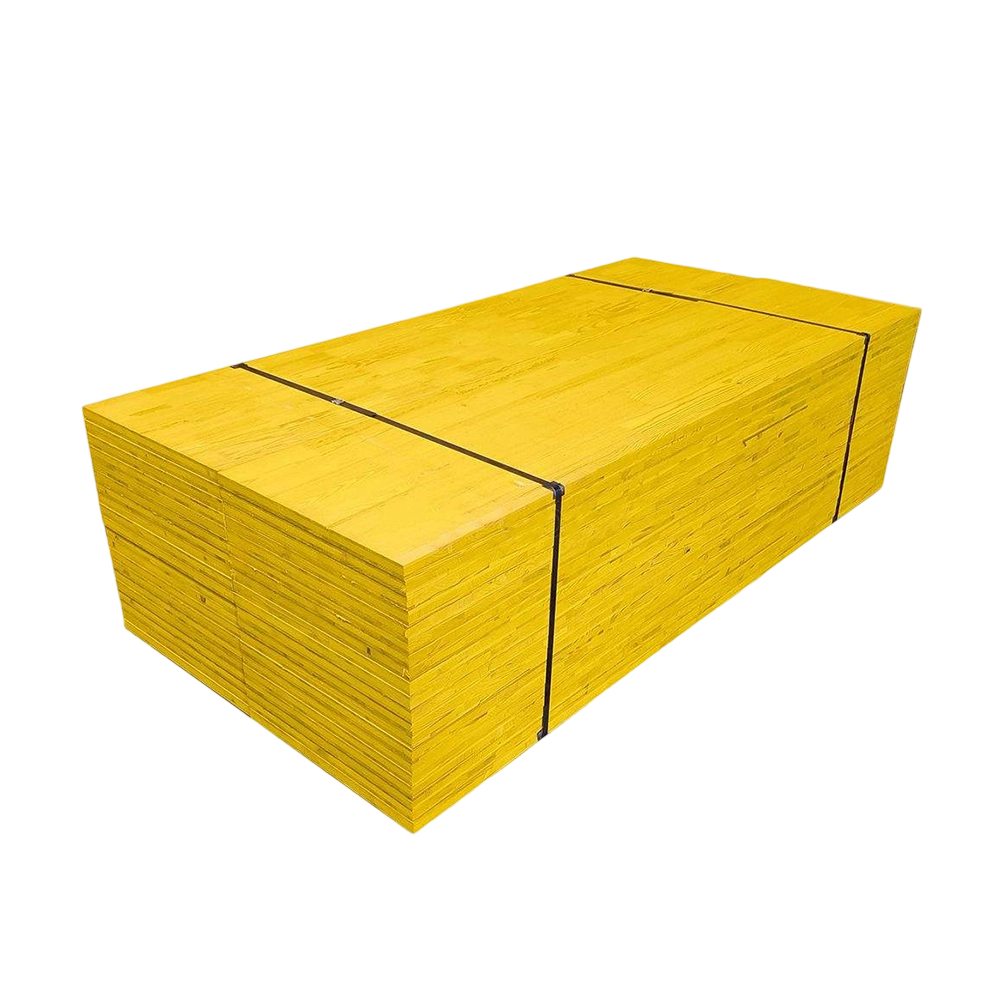 Yellow Shuttering Panel for Concrete FormworkDual-species spruce and fir core, finger-jointed construction, and uniform surface suit slab and wall formwork needing smooth concrete and load capacity.View Product →
MDF has a hard, uniform surface that resists point loads well. A screwdriver dropped on a painted MDF worktop leaves a small dent. The same impact on plywood may leave a mark that follows the grain and travels further. In surface hardness tests, a dense MDF board often outperforms a mid-density plywood board, and that result is quoted frequently by people arguing that MDF is the stronger material.
Impact resistance is a different test, and there plywood wins. Veneer plies absorb energy across multiple layers, so a hammer blow that dents plywood can crack or punch through MDF. The difference is most visible at edges. An MDF edge chips when bumped during transport or installation, and once the edge is broken the repair is cosmetic only. A plywood edge can be sanded, filled or re-sealed, and it will hold a screw again afterwards.
For door cores, load-bearing frames, pallets, crates and any panel that will be handled repeatedly, edge behaviour matters more than a strength certificate. For a rigid, screw-fastened cabinet carcass that will never move again, it matters very little.
Per millimetre of thickness, MDF is heavier. An 18 mm MDF sheet at 750 kg/m³ weighs about 13.5 kg/m², while an 18 mm full-birch plywood sheet at 680 kg/m³ weighs about 12.2 kg/m². That 10% difference is minor on one panel. It stops being minor once you compare stiffness-matched panels: 25 mm MDF reaches roughly 18.8 kg/m² against 12.2 kg/m² for 18 mm plywood.
Weight drives several costs that never appear on a panel quotation, including lifting equipment, two-person handling, transport payload and the load a wall or ceiling has to carry. On a 60 m² elevated deck, the stiffness-matched MDF option adds roughly 400 kg of dead load compared with the plywood option. That should be resolved in the structural design before any material is ordered, because it changes the framing underneath.
MDF machines predictably. There is no grain to tear out, no knots and no glue lines at the cutter, so deep profiles, moulded edges and CNC patterns come off the machine cleanly. It sands to a uniform surface and takes paint without the grain print-through that can appear on a painted plywood edge after two heating seasons.
Birch plywood brings two complications at the machine. Grain direction changes how the surface responds to a cutter, so climb-cutting decisions matter more. Exposed edges show a striped pattern that must be banded, filled or painted. In exchange, plywood takes screws, staples and nails far better, holds a joint under vibration, and does not disintegrate when a fastener is over-torqued.
Dust control differs as well. MDF produces very fine, respirable dust that requires extraction at the source and good filtration. Plywood dust is coarser but still needs extraction. Neither material belongs in an enclosed workshop without controls, and the difference in particle size is the reason MDF is often treated more strictly by health and safety assessors.
The cheapest panel per square metre is not always the cheapest way to build something stiff. The table below uses index figures with 18 mm MDF set at 100, and compares price against the stiffness delivered.
| Panel | Relative price per m² | Relative stiffness | Cost per unit of stiffness |
|---|---|---|---|
| 18 mm MDF | 100 | 38 | 263 |
| 25 mm MDF, stiffness matched | 140 | 100 | 140 |
| 18 mm birch plywood, along face grain | 210 | 100 | 210 |
| 18 mm marine-bonded birch plywood | 280 | 100 | 280 |
The table says something useful and slightly uncomfortable. On stiffness alone, the thicker MDF option is the cheapest way to build a rigid panel. That conclusion survives only if you ignore moisture, edge screws, weight, impact and service life. In a dry, static, screw-light application such as a painted backing panel, a jig or a speaker cabinet, choosing it is rational. In a wet bathroom, a load-bearing floor or a formwork cycle, the strength advantage of plywood is not a premium. It is the cost of doing the job once.
MDF wins in categories that have nothing to do with load carrying and everything to do with consistency.
MDF is pressed to a uniform thickness and stays flat in a dry room, so painted doors, drawer fronts and carcass components line up without extra sanding or shimming.
No grain, no patches, no glue lines at the surface. A painted MDF face reads as smooth under raking light, and moulded edges cut without tear-out.
Curved profiles, deep recesses and CNC lettering cut cleanly in every direction, because there is no grain direction to plan around.
For non-structural work under cover, MDF delivers a serviceable panel at a lower price per square metre than any comparable plywood grade.
Dimensional stability and a hard surface make MDF the default choice for routing jigs, vacuum fixtures and shop templates that must not move.
High density and low internal porosity give MDF useful sound-blocking mass in partitions, speaker cabinets and acoustic enclosures.
None of those advantages turn MDF into a load-bearing material. They simply explain why the answer to "which is stronger" is not the same as the answer to "which should I buy". A panel that is twice as strong but badly matched to the job is still a bad purchase.
The table below is the version most buyers find easiest to work from: common situations, the panel that suits each one, and the reason behind the choice.
| Application | Recommended panel | Reason |
|---|---|---|
| Cabinet carcass, dry interior, light use | 18 mm MDF or birch plywood | Either works; MDF is cheaper, plywood holds fittings better |
| Cabinet carcass with heavy drawers | 18 mm birch plywood | Edge screw holding under repeated drawer cycles |
| Shelf with a span over 900 mm | 18–25 mm birch plywood, grain along span | Stiffness along the grain resists sag |
| Bathroom or laundry vanity | 18 mm WBP birch plywood | Swelling of 2–6% instead of 12–25% |
| Concrete formwork, repeated pours | 18 mm film-faced birch plywood | Moisture resistance, impact tolerance and reuse count |
| Painted doors and drawer fronts | MDF | Uniform surface and no grain print-through |
| Structural subfloor | 18–21 mm structural-grade birch plywood | Panel shear capacity and screw holding |
| Decorative CNC screen or lattice | MDF or thin birch plywood | Clean machining in all directions |
| Heavy shipping crate or pallet | Birch plywood | Impact absorption and nail holding |
| Shop jig or vacuum fixture | MDF | Flatness, stability and cost |
Two situations deserve a second look. Shelving over a 900 mm span is the classic sag failure in both materials, and a thicker plywood shelf with the grain running along the span will outlast a thinner MDF shelf by years. Rigid panels that must stay light are often solved with a block board construction instead, because solid core strips carry load along one axis with very little material between them.
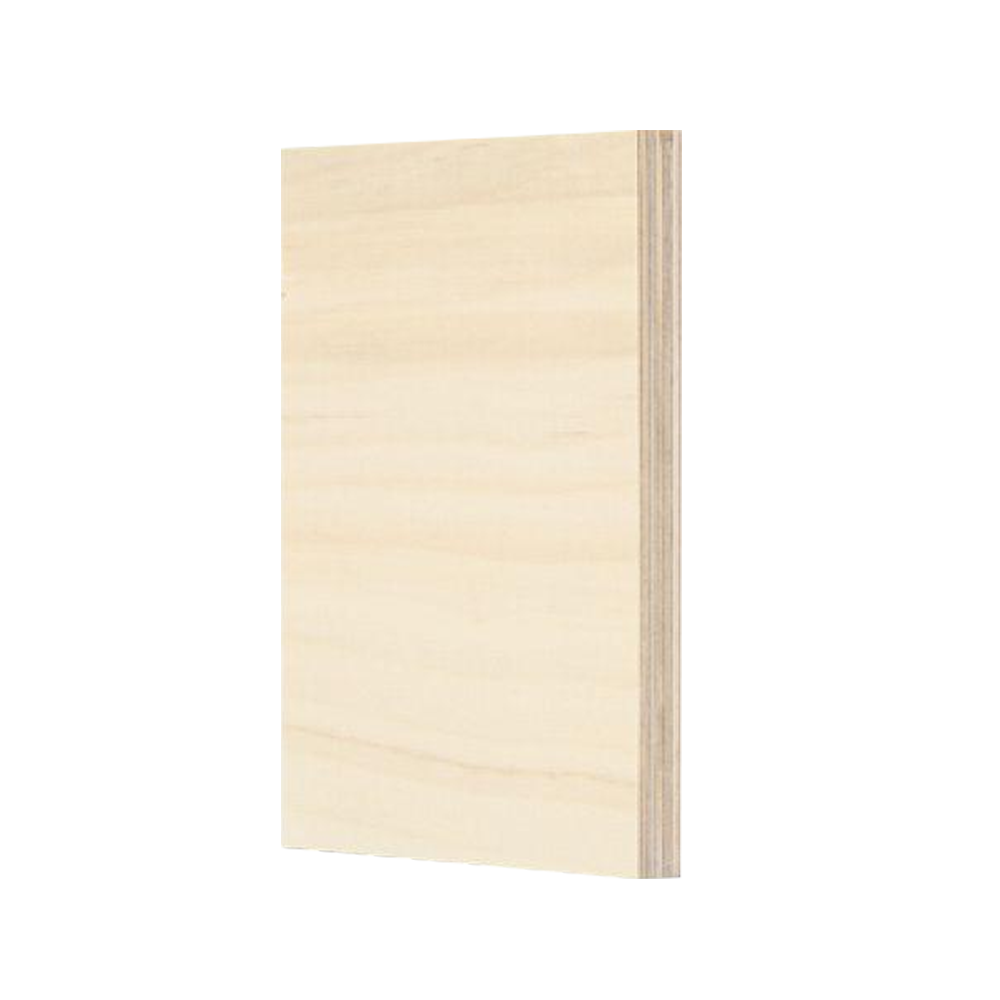
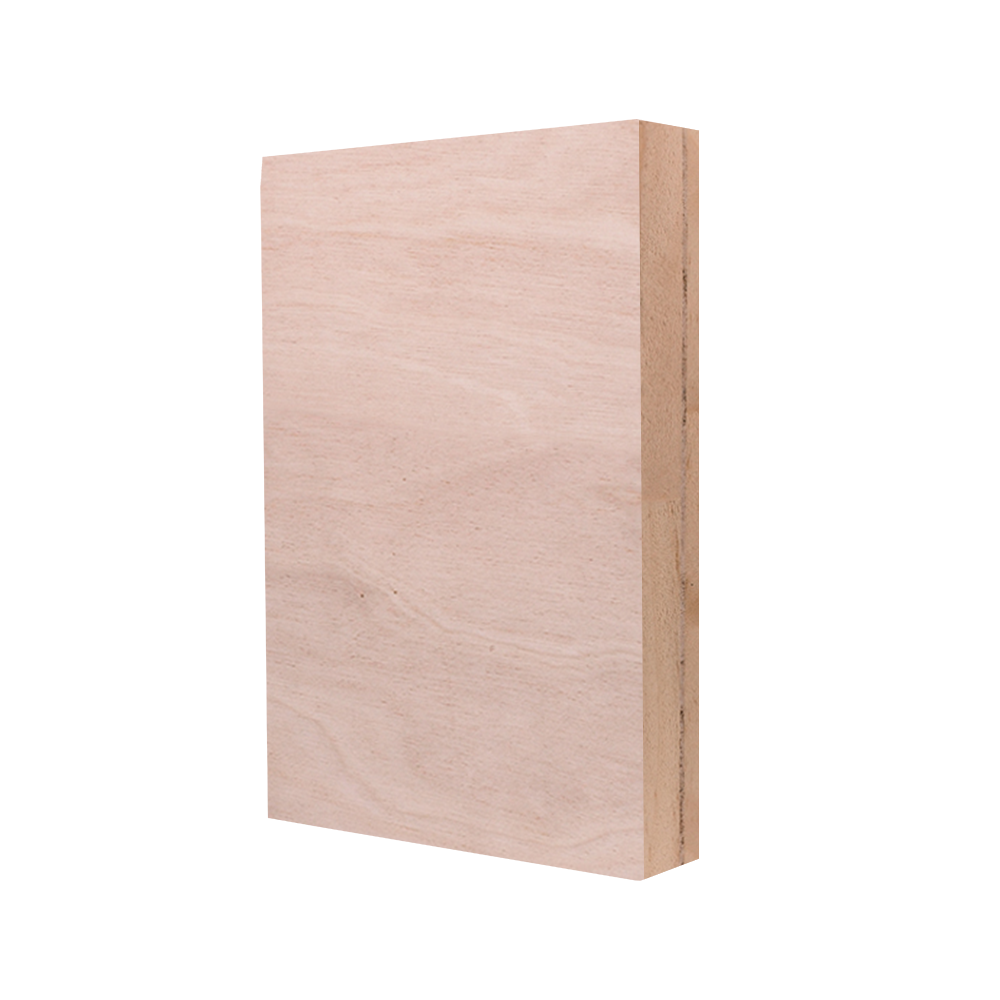
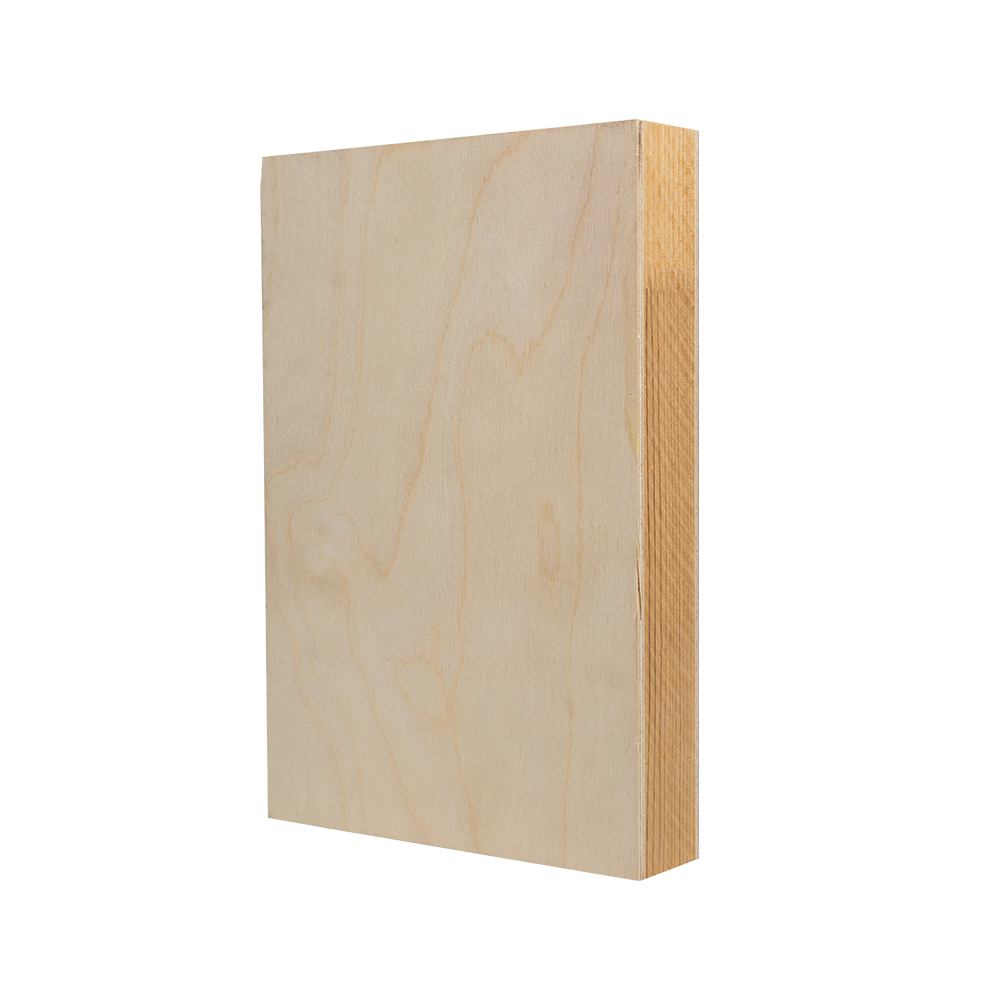 Birch Block Board with Pine and Fir CorePatented BB-grade birch veneer over a cross-arranged pine and fir core suits furniture, cabinets, and door panels requiring stability and low formaldehyde.View Product →
Two panels can both be sold as birch plywood and differ by 30% in bending performance. The gap comes from grade, core and glue. When you write a specification, these are the fields that decide the result.
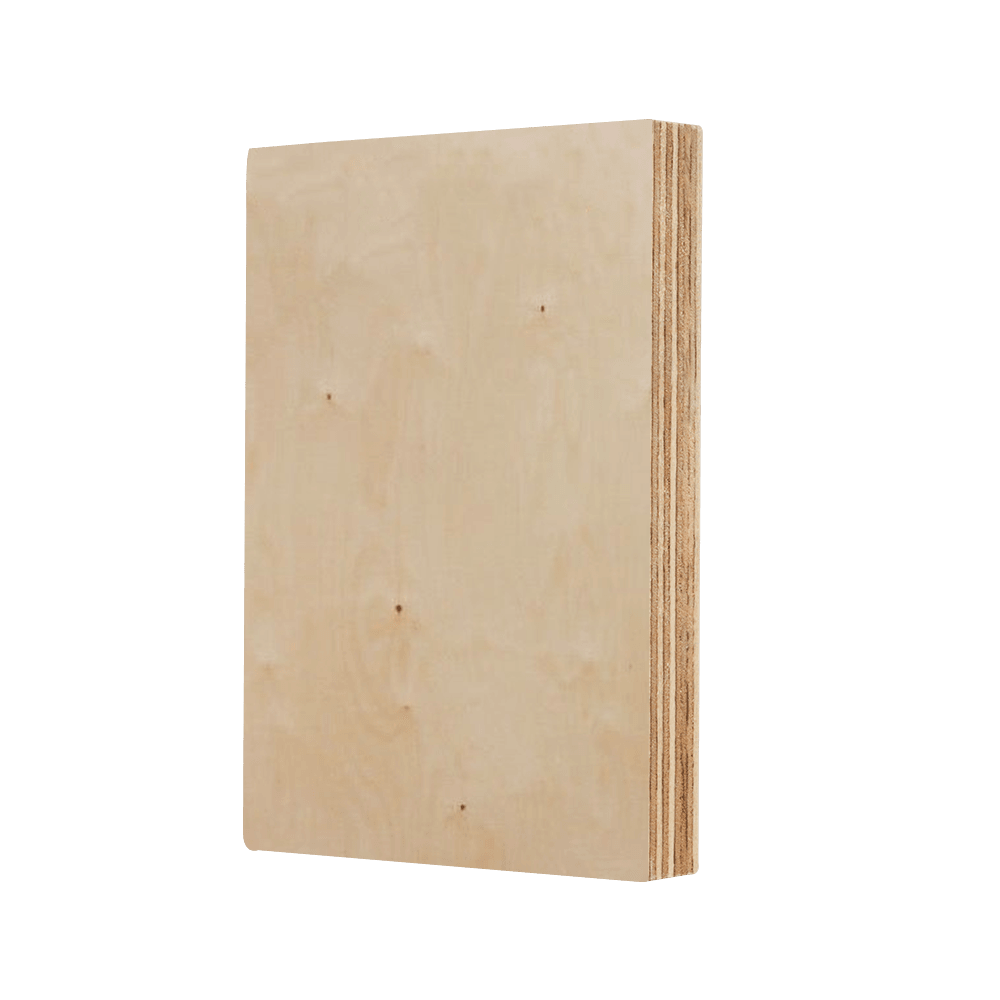
If the panel is going into a floor, a mezzanine or any structure where the load path runs through the sheet itself, the specification should name a structural grade and require test data rather than a description. Structural-grade birch plywood panels are graded and bonded for that duty, and the sheets should be marked accordingly so the grade can be verified on delivery.
Three questions are worth putting to any supplier. What is the ply count and core species at this thickness? What is the thickness tolerance in millimetres? Can you provide bending and internal bond data for the specific grade quoted? A supplier who answers all three is selling a controlled product. A supplier who answers with adjectives is selling a price, and the difference only becomes obvious after the panels have been cut.
No. Along the face grain, an 18 mm full-birch plywood panel is roughly twice as strong in bending and about 2.7 times as stiff. The only direction where the two values overlap is across the plywood face grain, and even there plywood retains a clear advantage in screw holding and moisture resistance.
Yes, within limits. Keep the span short, add thickness, or fit a stiffener under the front edge. Beyond about 900 mm with books on it, MDF sags noticeably within a year, and because the material does not recover its original shape after loading, the sag becomes permanent.
It can match stiffness, not strength. Roughly 25 mm of MDF equals 18 mm of birch plywood in stiffness along the grain, but it still fractures at a lower stress, still holds edge screws poorly, and weighs about 50% more per square metre.
Birch plywood, in both directions and by a wide margin at the edge. Face withdrawal runs 1,500–2,200 N for 18 mm plywood against 1,000–1,400 N for MDF, and the gap at the edge is larger because screws in plywood cross alternating veneers rather than a single compressed fibre mat.
No. Standard MDF swells 12–25% in thickness after 24 hours of immersion and loses a significant share of its stiffness, which it does not fully regain on drying. WBP-bonded birch plywood swells 2–6% and keeps its structure.
They are usually comparing surface hardness, screw-free flatness or cost, not load-carrying capacity. A dense MDF board does resist point loads well and is more uniform than plywood, but those properties are not the same as bending strength or stiffness.
Birch plywood for anything that will be hammered, clamped or drilled into repeatedly, because it absorbs impact and holds fasteners at the edge. Thick MDF works for a flat assembly surface where forces are distributed, but the edges chip and the material will not tolerate the same abuse.
Not as a structural panel. Load-bearing walls and floors need a panel with defined panel shear capacity and a recognised structural grade, which is where structural-grade plywood belongs. MDF is a non-structural board and should not be specified to carry building loads.
At equal thickness, MDF is heavier by roughly 10%. Once you match stiffness with a thicker MDF panel, the gap grows to around 50% more weight per square metre, which matters on elevated decks, wall-hung units and anything that ships by volume.
kaugnay na mga produkto

Copyright © Tianma Lvjian (Nantong) Wooden Structure Technology Co., Ltd. Rights Reserved.